Project description
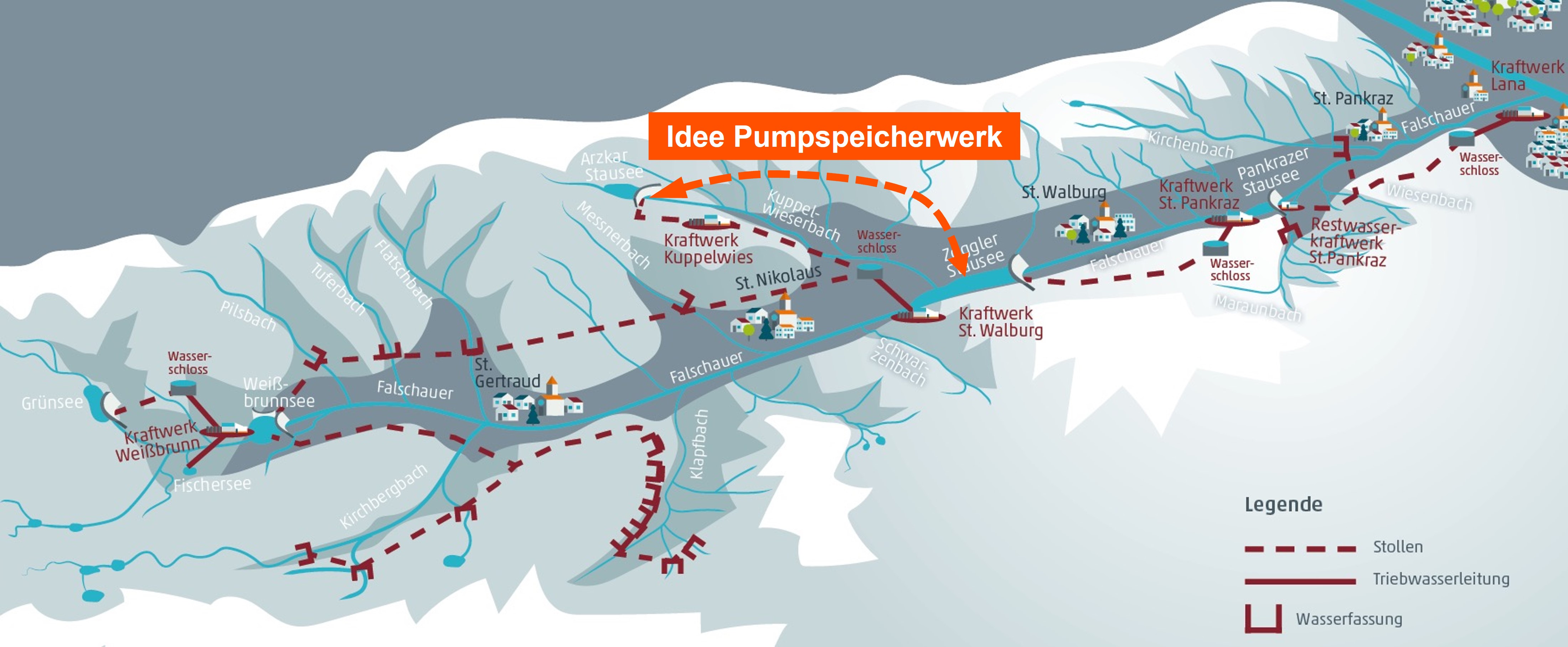
The project involves the construction of a pumping station in Val d'Ultimo, near Pracupola and Santa Valburga, with an estimated capacity of 400 MW.
This involves an underground connection between Lake Quaira (12.8 million m3) and the Zòccolo reservoir (33 million m3) located along the left side of the Pracupola valley. The diversion tunnel and the power station will be completely underground.
The water supply tunnel and the power station would also be built entirely underground.
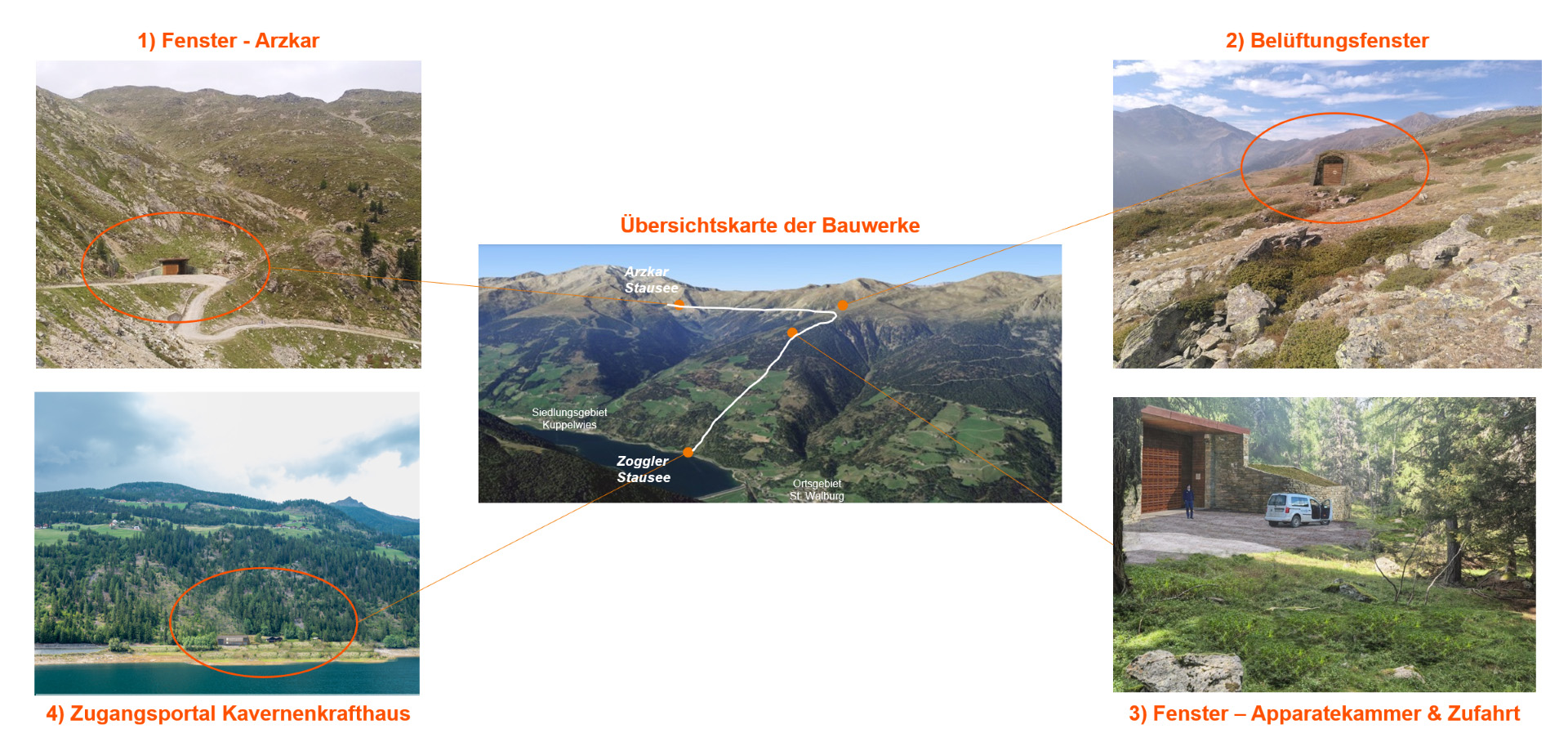
Once construction is complete, only three access portals and a ventilation opening at the hydraulic castle would be visible:
- one portal near Lake Arzkarsee,
- one near the Zoggler reservoir,
- and one at the equipment chamber at the top of the penstock.
The national transmission system operator Terna is working on a grid connection solution. The current plan involves constructing a new underground cable connection from the proposed project site to Lana. As soon as specific details become available, the information will be shared with and made available to the “für-ulten” working group.
STRENGTHS OF THE POSITION
- Use of existing basins and infrastructure: existing facilities will be used even more efficiently.
- Underground construction: only the three access points to the power station will be visible, while the entire power station will be built underground.
- Significant difference in altitude: the large difference in altitude of approximately 1,100 m will enable a high output of 400 megawatts to be achieved despite the relatively low flow rate.
ENVIRONMENTAL ASPECTS
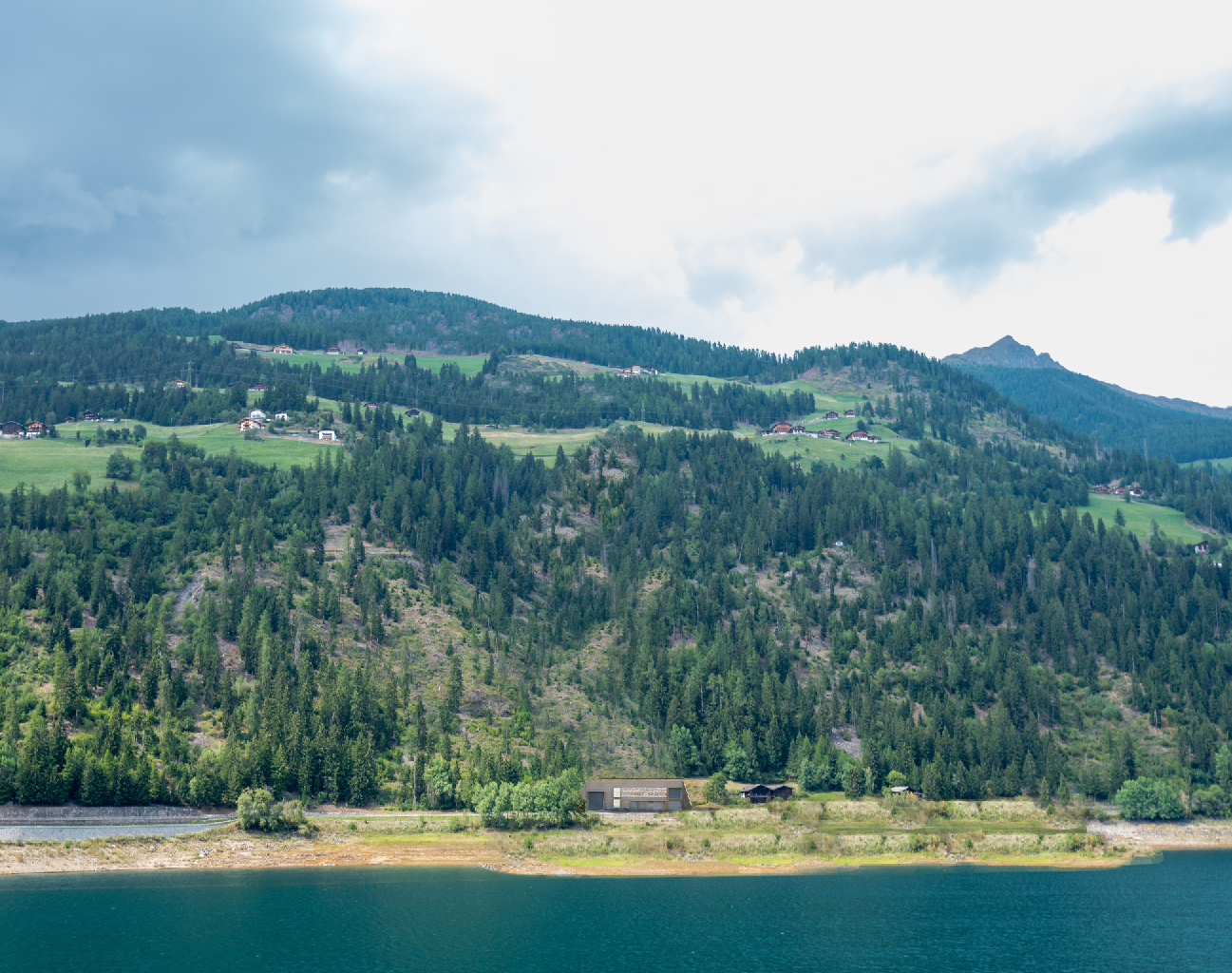
- Landscape protection: with the exception of the three access portals and the ventilation window of the piezometric well, the new facilities will be completely invisible. The central body, located on the northern shore of the Zoccolo artificial lake, will be located inside the mountain at a depth of approximately 400 metres.
- The entire hydraulic system will be completely underground and the water intakes for the two reservoirs will be located below the water level. In addition, the power station will use existing reservoirs and facilities.
- Dust and noise. In order to protect nature, people and the environment, specific measures were planned during the design phase to prevent, reduce or, if necessary, compensate for any negative effects resulting from the construction site.
Preservation of spring:
Alperia is aware of the importance of the water-supply issue on Larcherberg. Accordingly, both a geological and hydrogeological investigation programme requested by the Citizens’ Council and long-term spring monitoring are under way. As part of this work, the physical parameters of the springs in the project area are being recorded. The monitoring includes all springs whose users have expressed an interest in participating and have given their consent.Alperia has also prepared a feasibility study for an alternative water-supply system, which would ensure water supply on Larcherberg in the unlikely event that any springs were to run dry. If the project is implemented, Alperia will put this solution in place before tunnel construction begins, thereby preventing any interruptions to the drinking-water supply.
- At the request of the Citizens' Council, Alperia is conducting an in-depth investigation of the springs, together with external experts, based on continuous monitoring and geological surveys. The monitoring measures the flow rates, temperatures and conductivity of the springs, and the data is correlated with weather conditions. These analyses make it possible to determine whether a spring is fed by surface layers (interstitial water) or deep layers (fault water). Thanks to this information, geologists can assess whether the tunnel construction work could affect the springs.
- The Covolo lakes are located at an altitude of about 2,400 metres, behind Mount Gran Ladro. The lakes are about 515 metres from the planned tunnel and are located about 200 metres higher than the route. Their formation can be traced back to geological-tectonic processes linked to the birth of the Alps, in particular the formation of double ridges. The lakes are enclosed within virtually impermeable rock, with local permeability limited to fissures. Considering the topographical position and distance from the tunnel, together with the geological nature of the area, a direct negative impact of the construction work on the Covolo lakes can be ruled out.
Excavated material.
Construction work will take place mainly underground. Three access points are planned: the upper access point at Lake Arzkar, the lower access point at the Zoggler reservoir, and a central access point at the equipment chamber. There will also be a ventilation shaft for the surge tank.
Approximately 500,000 m³ of excavated material will be generated. This material can be reused for concrete production and for other construction projects, such as redesigning the banks of the Zoggler reservoir and landscaping elsewhere in the valley. To minimise the impact on local roads and limit lorry traffic, the excavated material will be transported by material cableway or through the new tunnels.
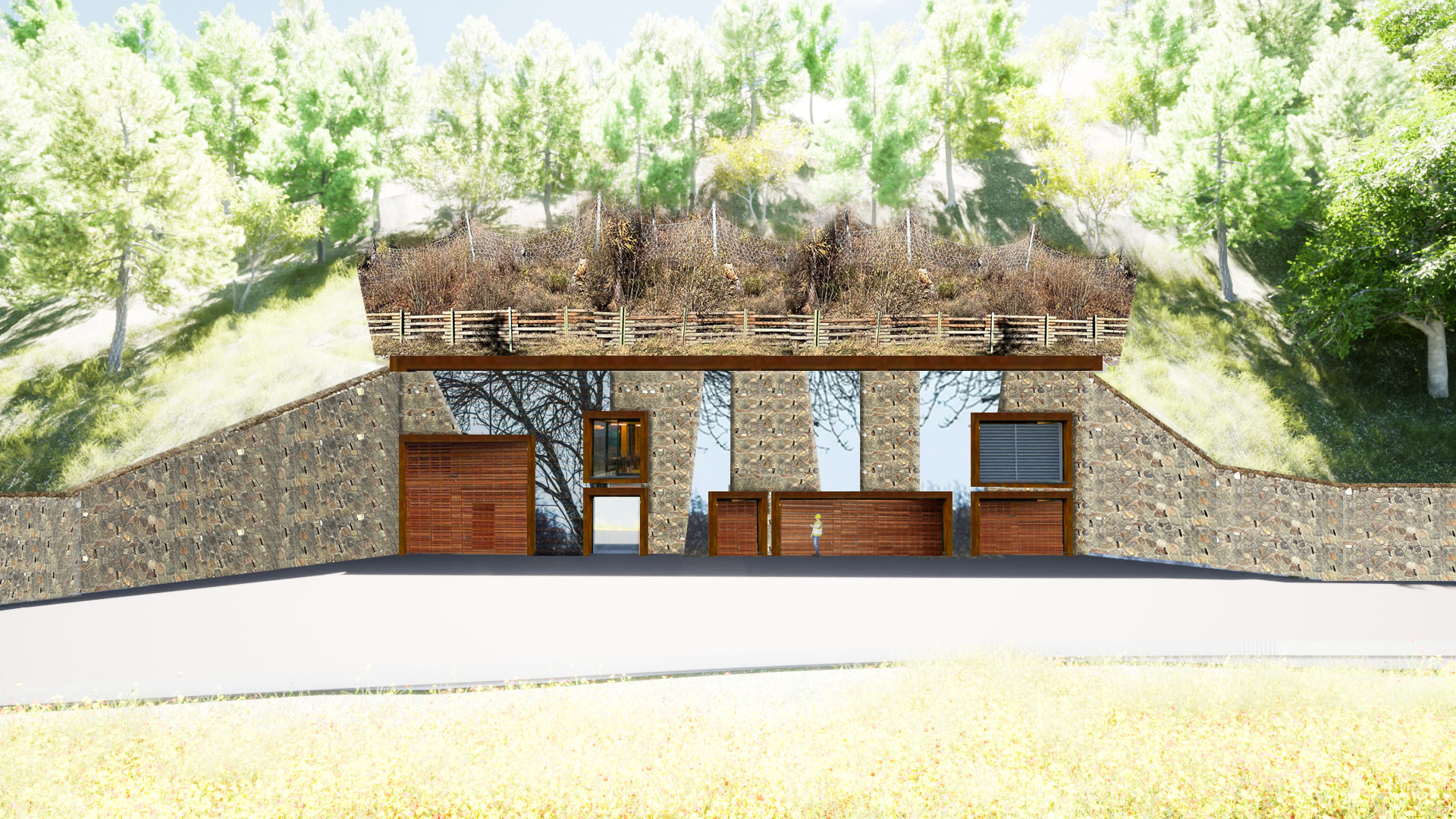
Rendering illustrating the design concept after completion: